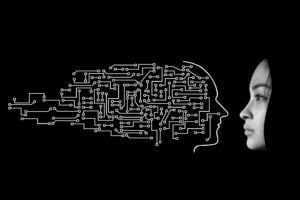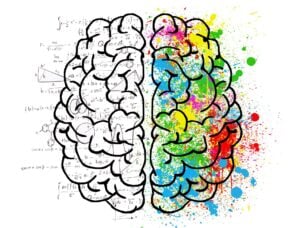
Nair reflects on the challenges posed by artificial intelligence, including the phenomenon of cognitive atrophy, where reliance on AI is said to diminish our cognitive capabilities. He emphasizes the importance of maintaining human insight and creativity amidst the rise of AI, advocating for exploration and original thinking rather than merely accepting AI-generated solutions.
Humans Can Find Their True Innovative Selves
All Things Insights: We have the pleasure of being with Mohan Nair, CEO of Emerge Inc., author, consultant, innovation expert. Thanks so much for coming on and talking with us about your latest book.
Mohan Nair: Thank you so much for giving me the opportunity to be with you.
All Things Insights: You’ve written a few books, and this new one really gets to the heart of the business community and even just society in general right now, with it being so AI driven. The book is called Unreachable, How Not to Lose Your Mind in an AI Obsessed Era. What inspired you to write Unreachable? Why do you believe this message is so critical in today’s environment?
Mohan Nair: The last book I wrote was in 2011, so you can imagine how long it took for me to formulate a thinking process for something to share with the world.It came to me because I was writing a book on innovation.And in that activity, the title of this book, innovation mojo, and that was going to be my sort of center of gravity about all the things I learned in innovation through the process of the last 20-plus years, especially since I’d worked in innovation during that period of time. I thought, could I capture the essence of it to serve the community of innovators?
But then this thing in 2017 turned up called GenAI, and it started to turn the world a little bit upside down.People started to formulate their own vision of what innovation looks like. It became much more ubiquitous. It became much more available to, shall I say, status quo individuals who could now innovate.
But the world broke up into two parts, people who are afraid of AI and then people who are obsessed with AI. I thought there would be a place in between that could really define where humans go when the so-called shores of AI start hitting the islands of our thinking. I wanted to write a book about humanity, basically, about how humans can find their true innovative self in the course of this fantastic, incredible introduction of the second brain that’s arriving.
Becoming AI Obsessed
All Things Insights: It’s a fascinating subject, especially as the innovation and the market research professional have experimented with AI. You raised some of these points at the FEI conference in 2025, when you did a talk on cognitive atrophy, which is a risk when we allow AI to think for us. Can you elaborate on this concept and how you feel this might impact individuals?
Mohan Nair: The interesting thing is when you say I’m AI obsessed, what does that mean? I mean, I coined that term, so bear with me. I think it’s when you start to go for convenience over real inconvenient thinking. You go for the easy solution. You go for what’s good enough, and you go for the first opinion being given by the machine, not really yourself. Those three habits have a tendency to kind of remove your thinking from the normal cycle of how you work.
I started to investigate what this term cognitive atrophy applied to. What I was surprised was there was a number of research papers and research documentation that proved, at least not longitudinally, but in the short term, that people’s cognitive capacity atrophies with an overuse of LLMs. Now the atrophying with respect to cognition, with respect to search engines and Google have been documented many times. It’s called the Google effect.
There’s enough research that proves that overuse of search engines makes you feel a sense of informed cognition, but actually you forget within less than one minute what you found and what you’ve learned. So you have this perception of knowing, but then you lose out in the end. And that once you know where you search something, you tend not to remember it. That has been proven.
But now that substrate, that iPhone and that Google engine is now plugged into the Chrome engine or any other engine you want, plugged into your mental veins. Now we’re pouring in the ability for the machine to talk with you or sometimes over you. What happens then? Well, a Swiss business school, the school for cognition, the school for research, did an analysis with 600 candidates and found that the people who are undereducated in comparison to the overeducated people and the younger people, tended to cognitively offload when they use large language models.
When I mean offload, they let the machine think for them, and more and more, their brain was not firing. Further research studies and EEG studies of the brain indicate that an overuse of LLMs does not generate much networking going on in the brain. In other words, the way we know our brain is working is when it fires at multiple locations and triggering each other. That’s not happening as much.
When you put all that together, there is a danger, but I don’t want to be the warning label of AI. I’m a big fan. I’m an AI professional myself and started using AI since the eighties. So I’m not against it. I’m absolutely for it. But I’d like not to be the warning label. I’d like to be the nutrition label for Gen AI. But how do you not overdo it? How do you under fear it?
How do you use it so you find yourself in an AI enablement world where you are bringing your innovation self along with that? The atrophy part is a part of the book, but it really is to outline that an overuse could redefine you and your mental state.
Becoming Insight Empowered
All Things Insights: You bring up so many good points, especially for innovation and market research where creative thinking, making business decisions, and being strategic are of prime importance. Can you talk a little bit of the balance between AI obsession and AI fear? What practical steps can individuals take to be insight powered and AI enabled?
Mohan Nair: I found the word insight to be very appealing as I was starting to write and develop this thinking for the last five years. I found it curious that there’s very minimal research on the idea of what is insightful.For innovators, that’s our currency. It’s not like just gathering data. It’s finding the source of that data being very powerful and then inciting that into an environment where you have a product or service that other people will purchase.
That word insight became sort of core to my thinking. Now your question is you call it the middle way. I think it’s the only way. I think that being insight powered and AI enabled may sound like a colloquium or a commentary I’m making that sounds good for books, but to be honest with you, it has literal meaning.
I think using the machine to find data is good for that. But the machine is not good in being able to create the yet to be created. The Airbnb’s of the world, the business designs we all think about, those are not fundamentally easy for a machine to understand unless it back annotates into the world of where it’s been before, what it’s been trained to do, and then it finds good combinatorial solutions that look like innovation. So if you’re an innovator that looks at old combinations and redoes them so it looks better, you probably will be replaced by a machine.
But if you are an innovator that is transformative and looking forward and looking for the next Airbnb, designing the next transformational business model or transformational idea into a scaffolding that others can climb, then I think you have the room to be AI enabled and insight driven, and the machine cannot reach you. For example, the machine could not have created Airbnb. It could not have created Tesla. It just could not have created those combinations that are yet to be created.
Let’s not mistake comprehension, which is what humans have, with combinatorial solutions that the machine is generating, which is an imitation of thinking, not thinking itself.
Part 2 of Mohan Nair’s interview will be published Wednesday, April 1.
Editor’s Note: For more information about Unreachable by Mohan Nair, visit the Amazon book store.